Botanical hair treatments sit on salon menus with a whiff of mystery: plant ingredients, a pleasant smell, an extra quarter hour at the shampoo bowl. Clients reasonably ask what the treatment actually does to the hair, and whether it differs from the deep conditioner in their shower. The honest answer is that a professional botanical treatment does three real jobs (adds moisture, deposits plant-based strengthening ingredients, and smooths the hair's surface) and that needing one depends entirely on what your hair has been through lately.
Here is the process, step by step, and the hair that benefits most.
- Assessment at the bowl. The stylist feels the hair wet: where it stretches, where it snaps, where it feels rough. Dryness, brittleness, and surface damage call for different emphases.
- A proper clarifying wash. Product build-up, minerals, and chlorine come off first. Treatment applied over build-up conditions the build-up, not the hair.
- Application in sections. The treatment is worked through the lengths and ends, where damage lives. Roots, being new growth, rarely need it and heavy product there flattens the style.
- Time and warmth. The product sits, sometimes under gentle heat or a warm towel, which helps ingredients coat and penetrate the hair shaft rather than rinsing straight off.
- Cool rinse and seal. A cooler rinse closes the surface back down, locking in the smoother feel and the shine that comes with a flat, aligned surface.
- The verdict. You should feel the difference combing through afterward. A treatment that leaves hair unchanged was either the wrong formula or applied over too much damage to matter cosmetically.
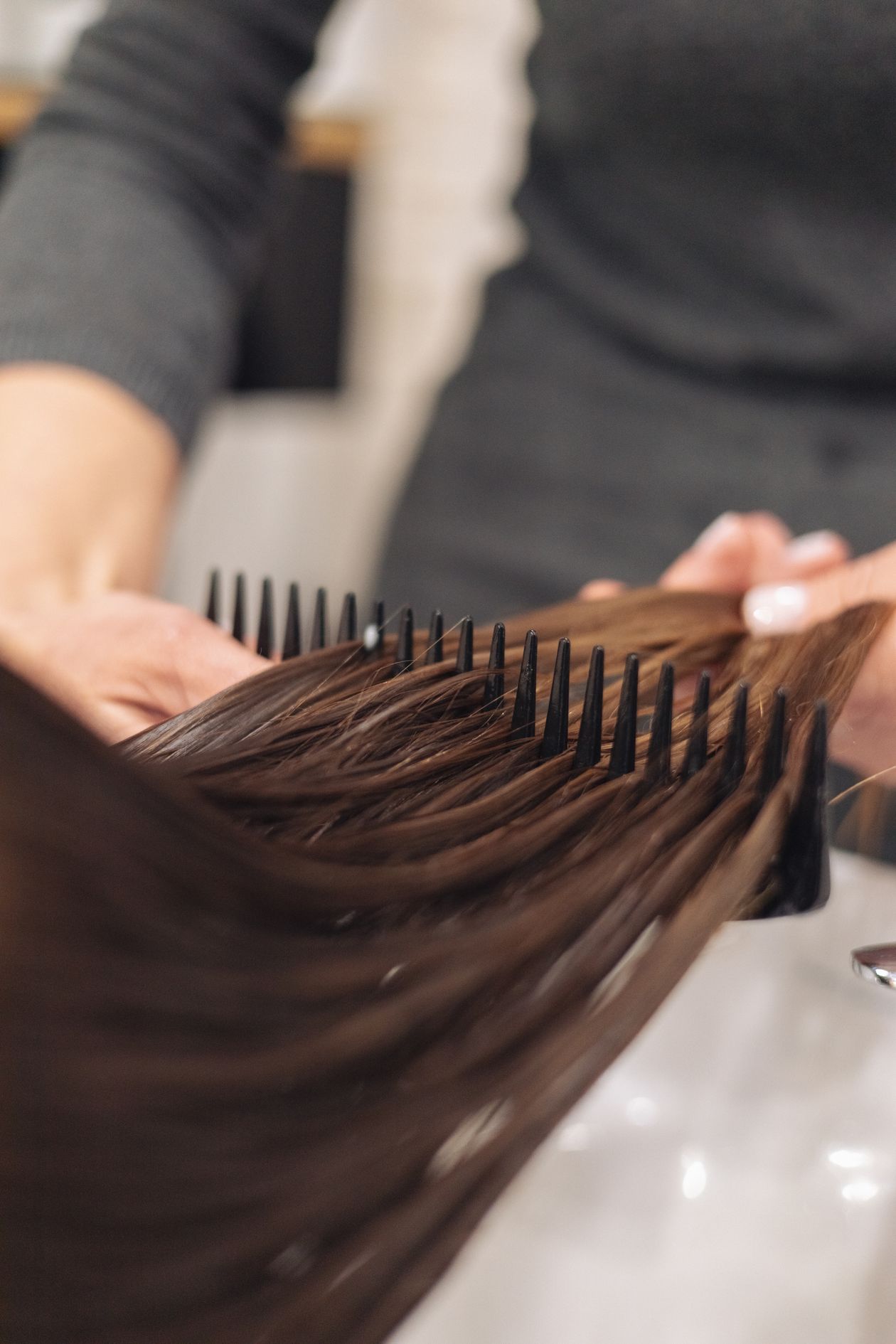
What is in it, in plain terms
Aveda's botanical lines, the ones used at Bella Vita in Mint Hill, build around plant-derived ingredients: oils such as sunflower, castor, and jojoba in the color system, and botanical blends in the repair and moisture treatments aimed at strengthening the hair's feel and restoring flexibility. Translate the poetry and the jobs are standard hair science: lubricate the surface so strands slide instead of snagging, add humectants that hold water in the hair, and deposit lightweight proteins or plant equivalents into the rough spots of damaged hair so it behaves more evenly. No treatment welds split ends back together or undoes chemical damage permanently. What it does is restore manageability and shine for weeks, and reduce the friction that causes further breakage daily.
Who gets the most from one
Color clients, first of all: lightened and colored hair loses moisture and surface smoothness in processing, and a treatment at the same appointment starts repayment immediately. Then heat stylists, swimmers in chlorine season, anyone growing hair long (the ends of long hair are years old and show it), and hair coming out of a Piedmont summer of sun and humidity-fighting. Hair that gains least is virgin, short, and healthy, which needs little beyond a good conditioner. A stylist who tells you that, instead of selling the add-on, is a stylist to keep.
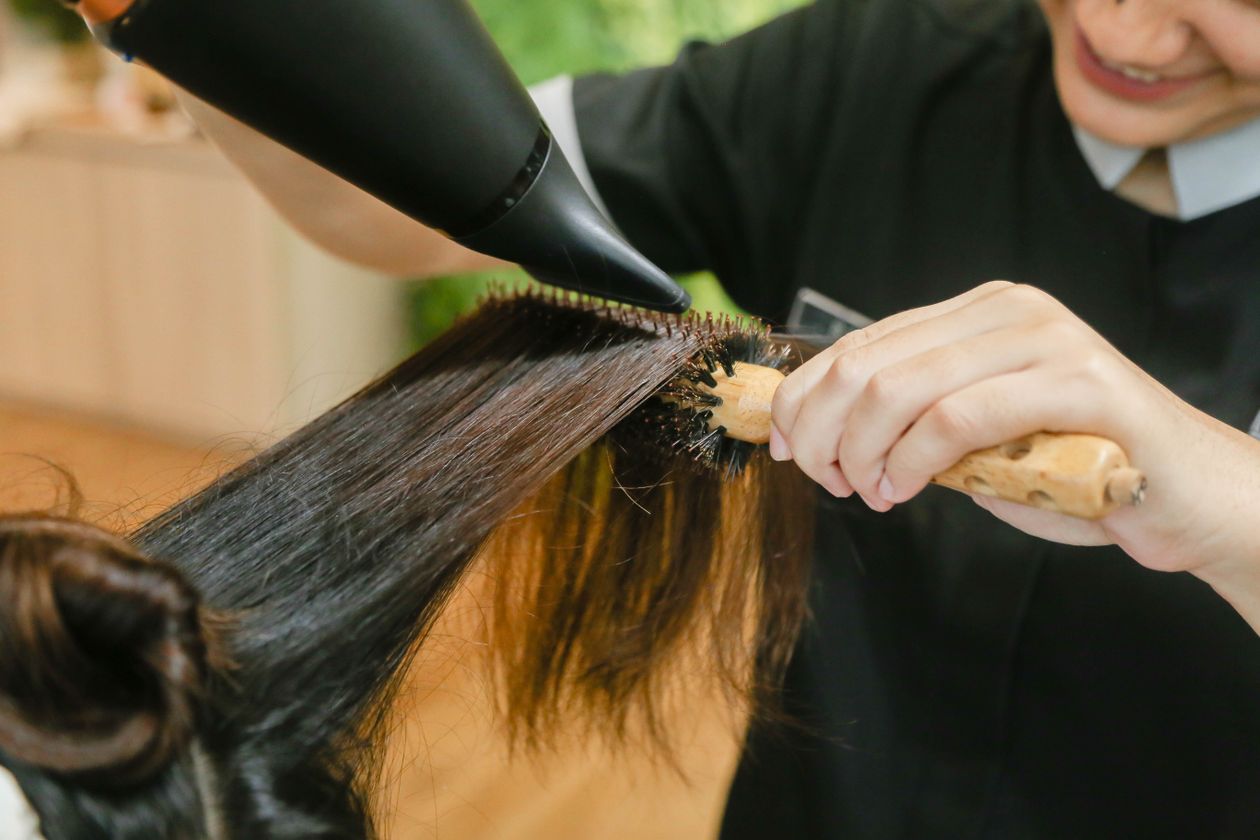
How long it lasts and how home care fits
Expect the improved feel to hold for several weeks, fading gradually with washing rather than vanishing at the first shampoo. Home care stretches it: a conditioner matched to the treatment's purpose, heat protectant as a daily habit, and restraint with clarifying shampoos, which reset hair back toward its untreated state. Many clients fold a treatment into each color appointment and skip standalone visits. Others book one at the change of seasons, when hair's needs shift. Either rhythm is sensible; the treatment is maintenance, and maintenance is a rhythm, not an event.
Treatment or haircut: which does my hair need?
The mirror test is simple. If the problem is feel (rough, tangly, dull, hard to comb) a treatment is aimed at it. If the problem is shape and ends (thin, see-through tips, splits you can see, a silhouette that will not hold) only scissors fix it, and a treatment over desperate ends is polish on a problem that is about to travel further up the hair. Many appointments rightly do both: a small trim to remove the unsaveable, then treatment for everything that remains. Order matters, and your stylist will sequence it so product is not spent on hair that is leaving anyway.
Common questions
Is a botanical treatment the same as a deep conditioner?
Related, but stronger and more targeted. Salon treatments use higher concentrations, a clarifying prep, and time under warmth, and the effect lasts weeks instead of days.
Can a treatment repair my split ends?
No product can. Treatments smooth and protect the hair above the split and slow further damage. The split itself is fixed only by scissors, which is why treatments pair well with a trim.
Will it weigh my fine hair down?
It should not, if the formula and placement are right. Fine hair gets lighter moisture formulas kept to the ends. Say fine hair when booking so the choice is made well.
Photos in this guide are representative stock images.
← All guides from Bella Vita Salon← Back to Bella Vita Salon