The six weeks between color appointments have their own maintenance economy: the habits that cost nothing decide if your color looks fresh at week five or tired at week three. Sun, water, heat, and washing are the four forces working on colored hair every day in Mint Hill, and each has a countermeasure simple enough to be a habit rather than a project. Clients whose color always looks good are rarely doing anything heroic. They are doing four or five small things consistently.
Organized by the force they counter.
| The force | What it does to color | The countermeasure |
|---|---|---|
| Sunlight | Fades pigment and warms tone, fastest on the top layer | Hats outdoors; UV-protectant leave-in in summer months |
| Hot water and frequent washing | Lifts a little pigment with every wash | Wash less often, lukewarm water, shampoo the scalp not the ends |
| Heat styling | Dulls the surface and shifts tone, especially blondes toward yellow | Heat protectant every time; lower temperatures; fewer passes |
| Chlorine and minerals | Builds up on hair, can tint light color greenish and make all color look flat | Rinse before and after swimming; an occasional clarifying wash followed by deep conditioner |
| Friction and rough handling | Roughs the cuticle so color looks dull even when pigment remains | Gentle detangling from the ends up; a smooth pillowcase; no towel turbans twisted tight |
Washing: the biggest lever you control
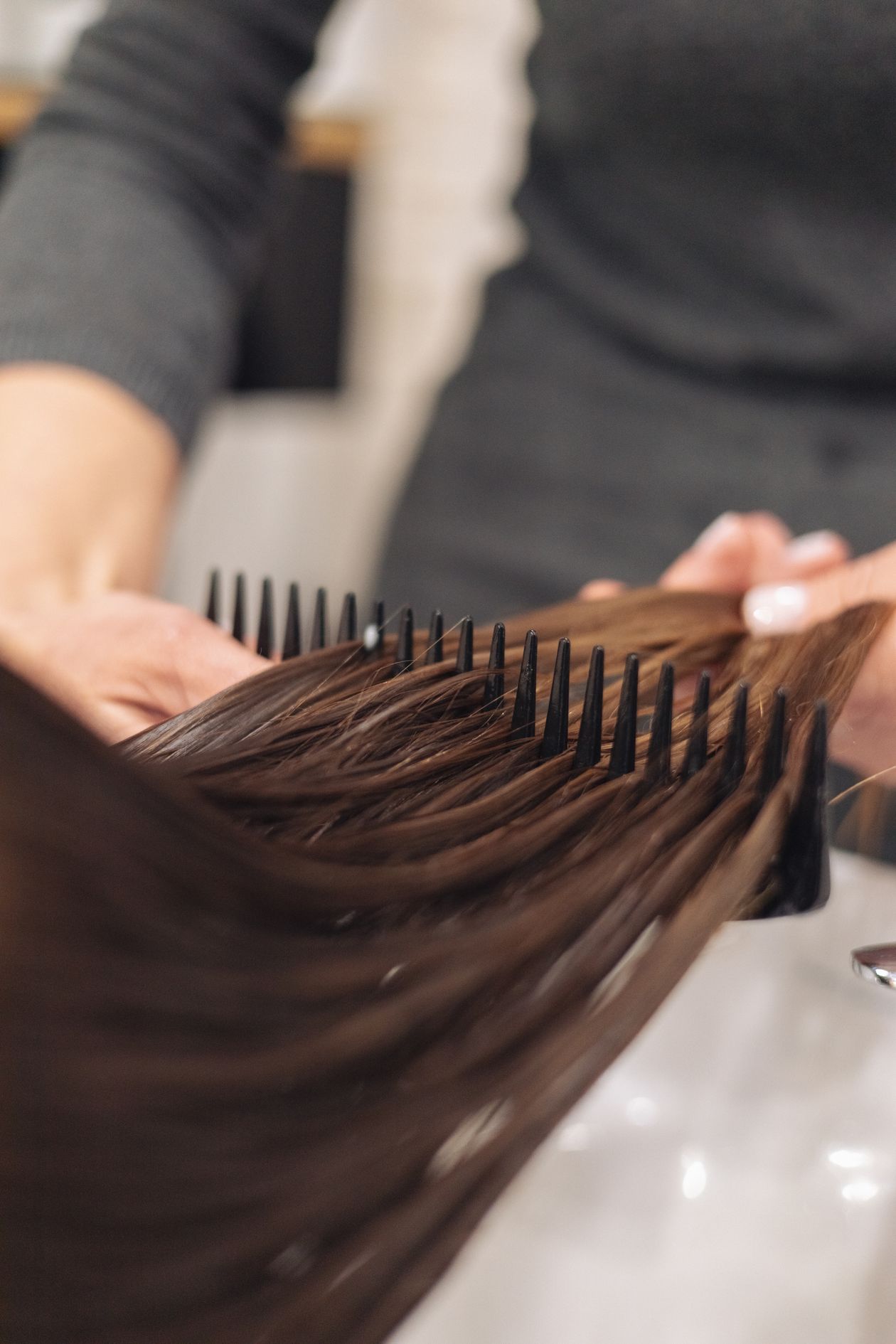
Most colored hair does best washed every two to three days rather than daily, and the adjustment period is shorter than people fear: scalps typically settle within a couple of weeks. Technique matters as much as frequency. Shampoo belongs on the scalp, where the oil is; the lengths get cleansed by the rinse running through them and do not need scrubbing, which only roughs and fades them. Conditioner belongs on the lengths, every wash, without exception. Lukewarm water is kinder than hot at every step. None of this is exotic, which is the point: color longevity is mostly laundry technique.
Toning at home, carefully
Between gloss appointments, color-depositing and toning products can stretch the tone: violet shampoos for blondes fighting yellow, blue for brunettes fighting orange, used occasionally rather than daily. These are maintenance, not color, and they have failure modes worth knowing: overuse builds a dull cast of its own, especially on porous ends, and toning products on hair they were not mixed for can surprise you. Follow your stylist's specific recommendation for your shade rather than the internet's, and bring the bottle, or a photo of it, to your appointment if your tone has drifted oddly. Diagnosis is faster with evidence.
The halfway appointment, again
Recall the structure from every colorist's playbook: the full appointment, then a gloss at the halfway point, keeps color looking serviced the entire interval. Home care and the gloss are complements, not rivals: home care slows the fade, the gloss resets it. Clients who do both routinely get asked whether they have just had their color done, at week five, which is the entire objective of the exercise. If your salon offers toning as a quick standalone service, as Aveda salons like Bella Vita typically do within their color work, it is the highest-value short appointment on the menu.
When home care is not the problem
Sometimes color fades fast because the hair itself is compromised: over-lightened, porous hair cannot hold pigment the way healthy hair does, and no shampoo discipline fixes porosity. The signs are color that looks great for a week and gone by the third, ends that grab tone darker than the roots, and a generally thirsty feel. That conversation belongs at the salon, and the answer is usually a season of conditioning treatments, gentler color strategy, and trims. Knowing the difference between a care problem and a hair-condition problem saves months of buying the wrong bottles.
Finally, keep a note, even a phone photo, of how your color looks at week one and week five. Memory flatters and forgets in both directions, and showing your stylist the fade pattern at your next visit turns a vague complaint (it never lasts) into a diagnosable fact with a specific fix.
Common questions
Does dry shampoo hurt color?
No. Used on the scalp between washes it helps color by extending the interval. Brush or massage it through so no white residue sits on darker hair.
Why does the top of my head fade faster than underneath?
Sunlight. The top layer takes the full ultraviolet load while the underneath stays shaded, which is why hats and UV leave-ins matter most exactly there.
Can I swim in a pool with fresh color?
Give new color a couple of days to settle, then rinse hair with clean water before swimming, rinse again after, and use a clarifying wash occasionally during heavy pool weeks.
Photos in this guide are representative stock images.
← All guides from Bella Vita Salon← Back to Bella Vita Salon